Meeting Point: Khabarovsk
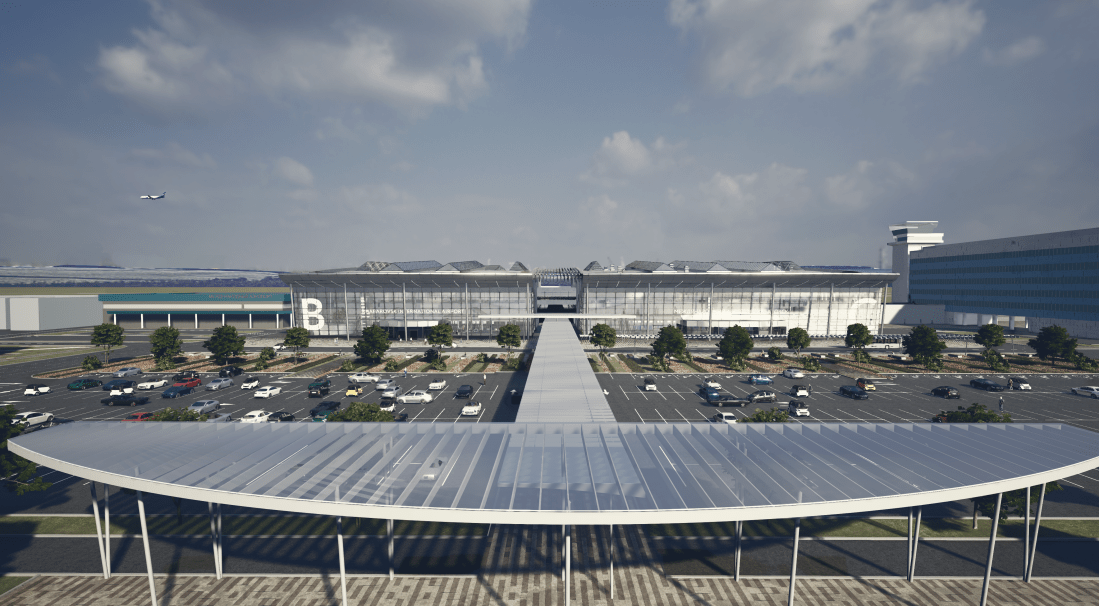
On October 14, 2019, the new passenger terminal of Khabarovsk Airport opened to the public. Designed by the German studio WP|ARC, the domestic terminal marks the first phase in developing the airport complex into a full-fledged Air City — a multifunctional business park.
In this article, the design team shares with Tatlin the five-year story behind the project and their vision for the airport’s continued growth.
From Seaplane Port to Air Hub
Aviation in Khabarovsk began in 1929, when a seaplane port opened on the banks of the Amur River. As air traffic grew, new facilities were needed — by 1931, a new airfield was built, and only seven years later another, more advanced airfield replaced it.
By 1954, the airport included a new runway and passenger terminal. A decade later, a second terminal followed, and by the time of EXPO-70, Khabarovsk airport had earned international status and launched its first flight to Japan.
During the 1970s–1980s, the airport became part of the city’s cultural life, largely thanks to the on-site restaurant Aquarium, famous for live jazz performances and rare “imported” drinks. It was a place where people came not only to travel, but to enjoy an atmosphere of openness and curiosity — a reflection of how air travel itself symbolized modernity at the time.
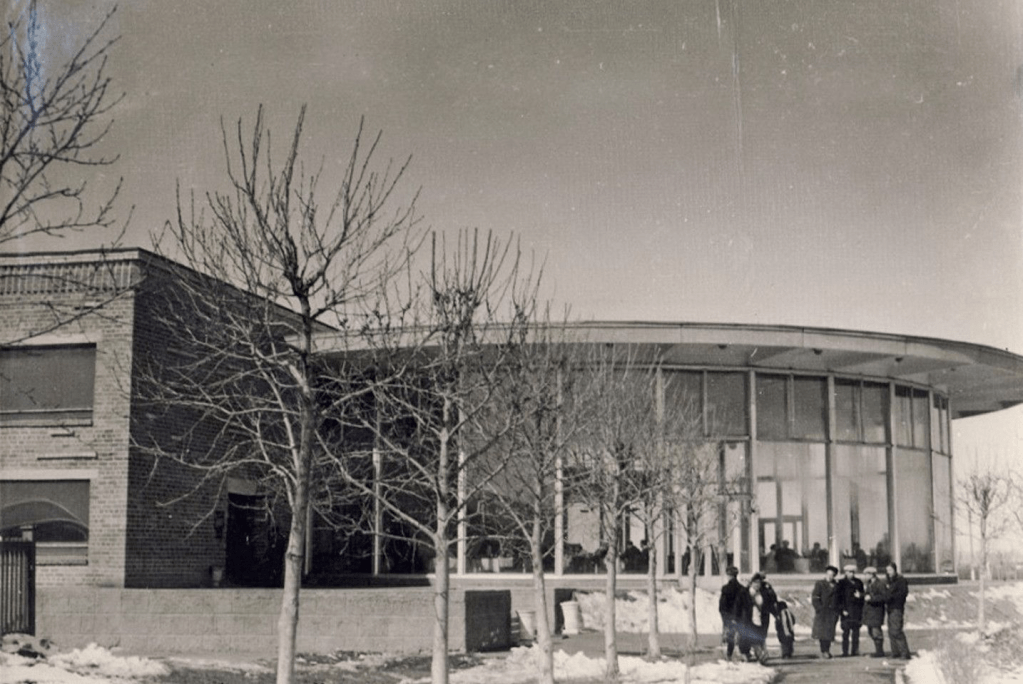

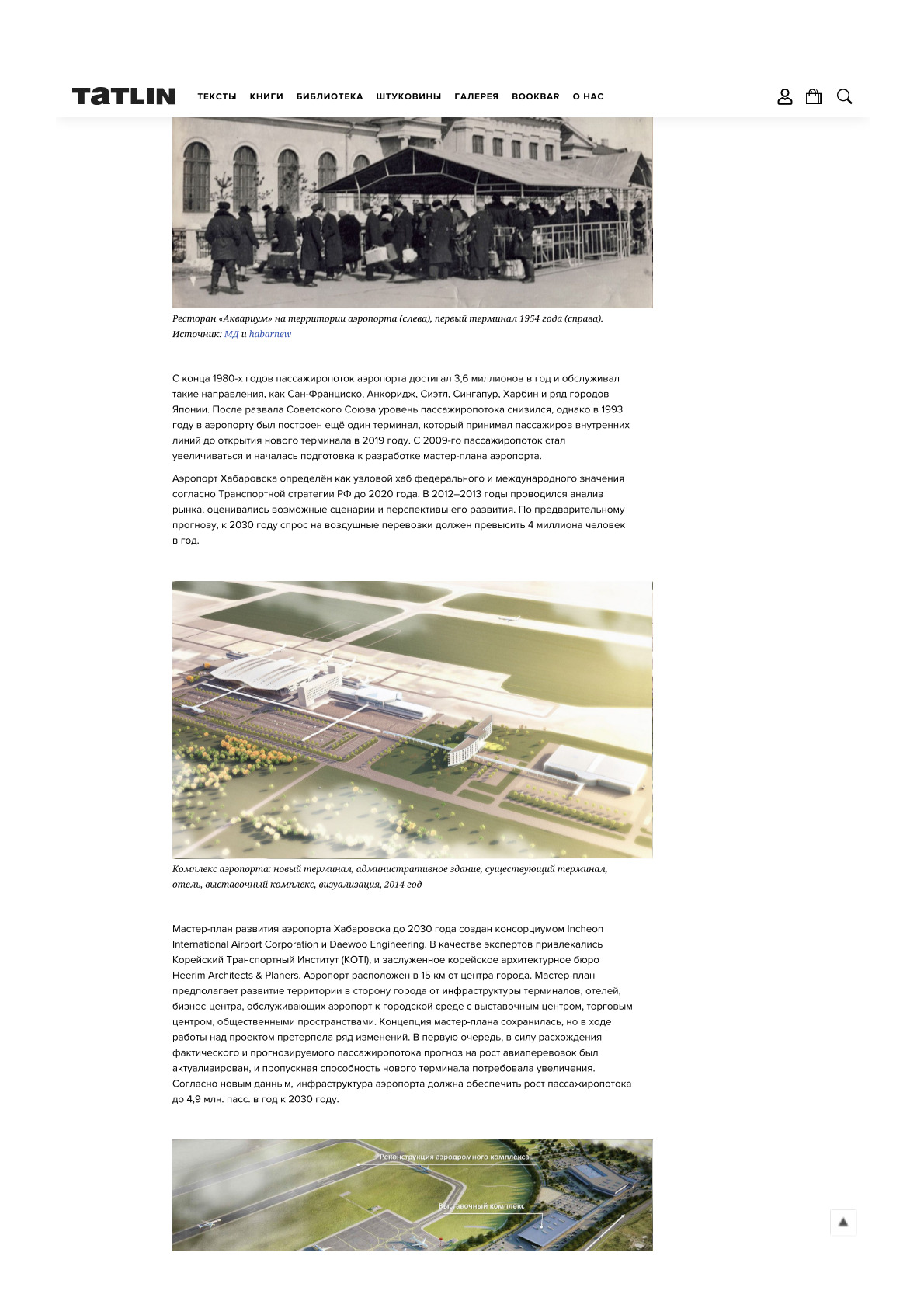
Fig. 1. Restaurant “Aquarium” on the airport premises (left); first terminal built in 1954 (right). Source: МД and habarnew
By the late 1980s, the airport’s annual passenger volume reached 3.6 million, serving destinations such as San Francisco, Anchorage, Seattle, Singapore, Harbin, and multiple Japanese cities.
After the collapse of the Soviet Union, traffic declined. Still, in 1993 a new domestic terminal was built, serving passengers until the opening of the new terminal in 2019. From 2009 onward, passenger numbers began rising again, prompting preparations for a master plan to guide the airport’s long-term development.
Master Plan and Development Strategy
According to Russia’s Transport Strategy 2020, Khabarovsk Airport was designated a federal and international hub. Between 2012 and 2013, a market analysis and scenario study were carried out to determine its growth potential.
Preliminary forecasts projected passenger demand to exceed 4 million travelers per year by 2030.

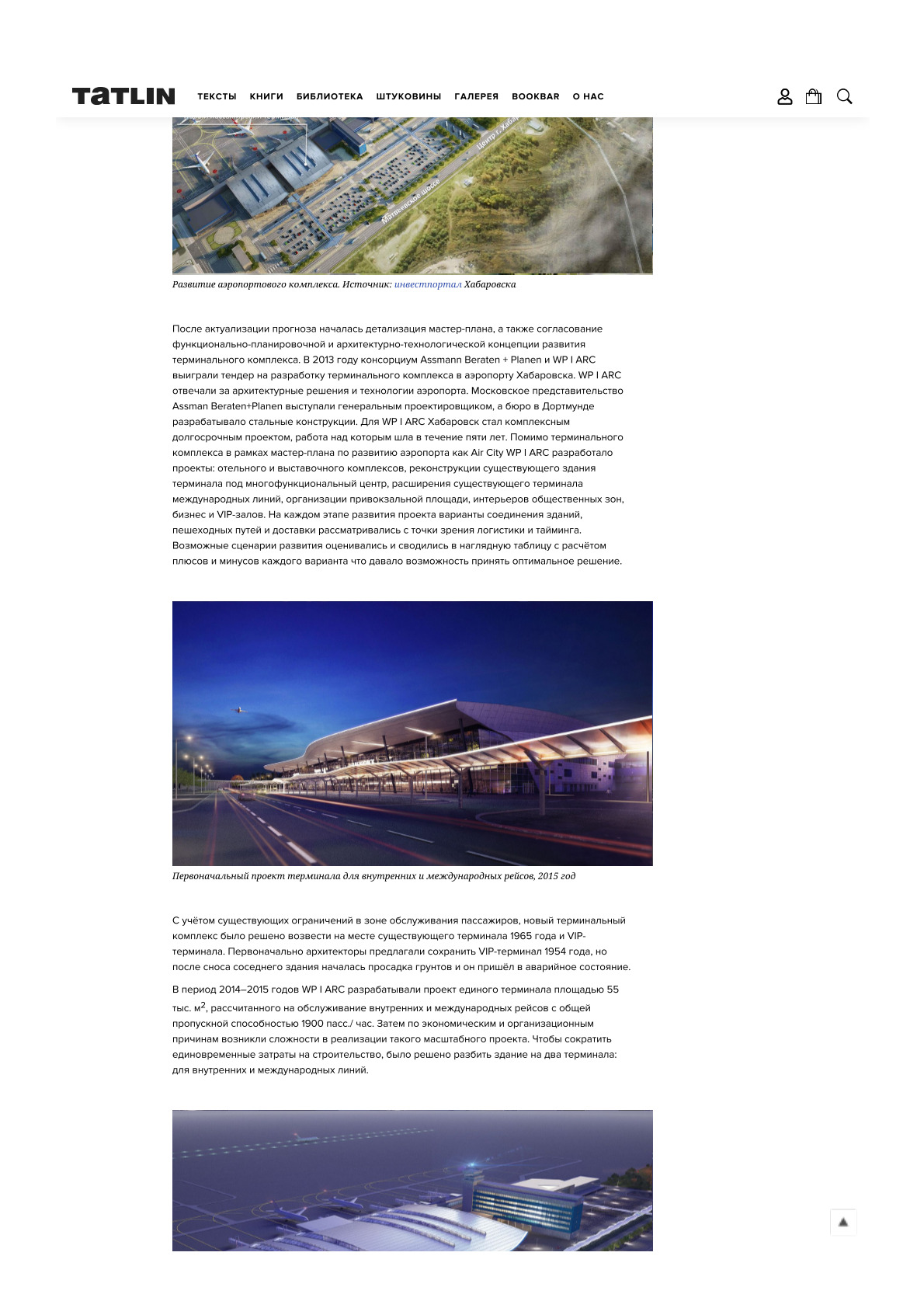
Fig. 2. Airport complex: new terminal, administration building, existing terminal, hotel, exhibition complex, visualization, 2014..
The Master Plan for Khabarovsk Airport was developed by a consortium including Incheon International Airport Corporation and Daewoo Engineering, with expert input from the Korea Transport Institute (KOTI) and the well-known Korean architectural firm Heerim Architects & Planners.
Located just 15 kilometers from the city center, the airport’s development concept envisioned an expansion toward the city, gradually linking airport facilities — terminals, hotels, and business centers — to new urban spaces featuring exhibition halls, retail centers, and public areas.
While the general concept remained intact, the plan was refined over time. As updated traffic data revealed faster-than-expected growth, the new forecasts raised the airport’s required capacity to 4.9 million passengers per year by 2030.
This adjustment triggered a detailed phase of master plan development, aligning functional layouts, architectural concepts, and technological solutions for the terminal complex.
From Master Plan to Terminal Design
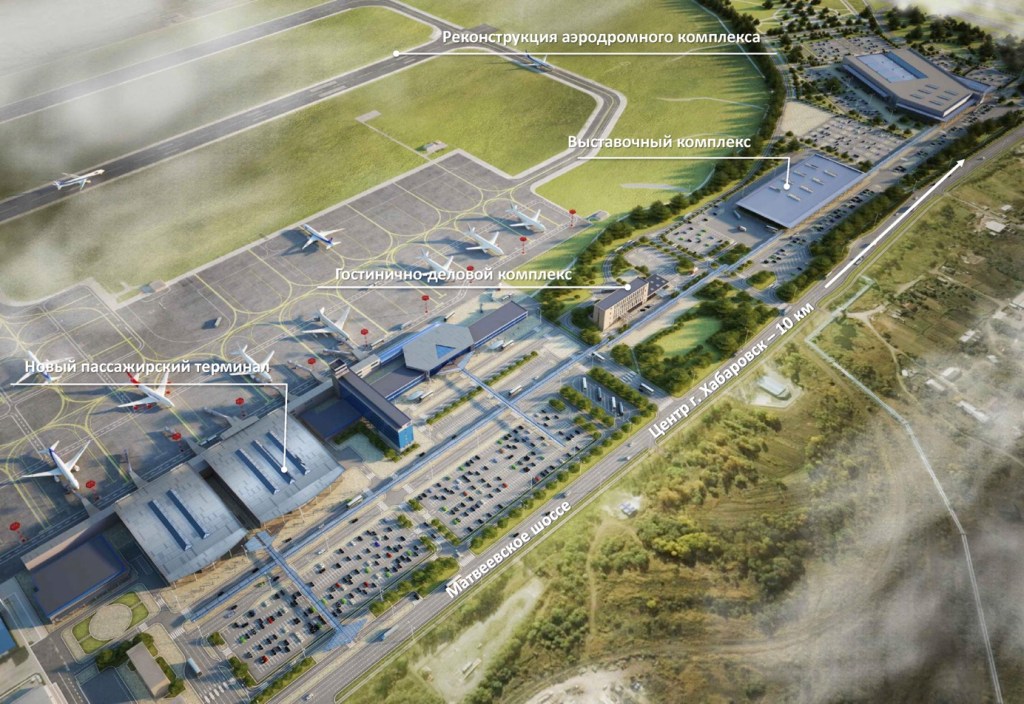
Fig. 3. Development of the airport complex. Source: Khabarovsk Investment Portal (инвестпортал)
In 2013, the consortium of Assmann Beraten + Planen and WP|ARC won the tender to design the terminal complex. WP|ARC took responsibility for the architectural and technological design, while Assmann’s Moscow office served as general designer, and its Dortmund office developed the steel structures.
For WP|ARC, Khabarovsk became a long-term and comprehensive project that lasted five years. Beyond the main terminal, the bureau designed an airport hotel, exhibition complex, redevelopment concepts for the existing terminal into a multifunctional center, as well as concepts for expanding the international terminal, organizing the forecourt, and designing interiors for public zones and VIP lounges.
At each stage, the team assessed the logistics and timing of passenger flows and building connections, comparing alternative layouts in detailed evaluation tables that listed each option’s advantages and disadvantages — allowing decisions to be based on a transparent logic of efficiency and service quality.

Fig. 4. Initial design of the terminal for domestic and international flights, 2015.
Design Evolution and Phased Construction
Given the physical constraints of the existing site, the new terminal was to be built on the site of the existing 1965-construction year terminal and the old VIP terminal. Originally, the architects proposed preserving at least the 1954 VIP building, but after adjacent demolition works caused ground subsidence, it had to be removed for safety reasons.
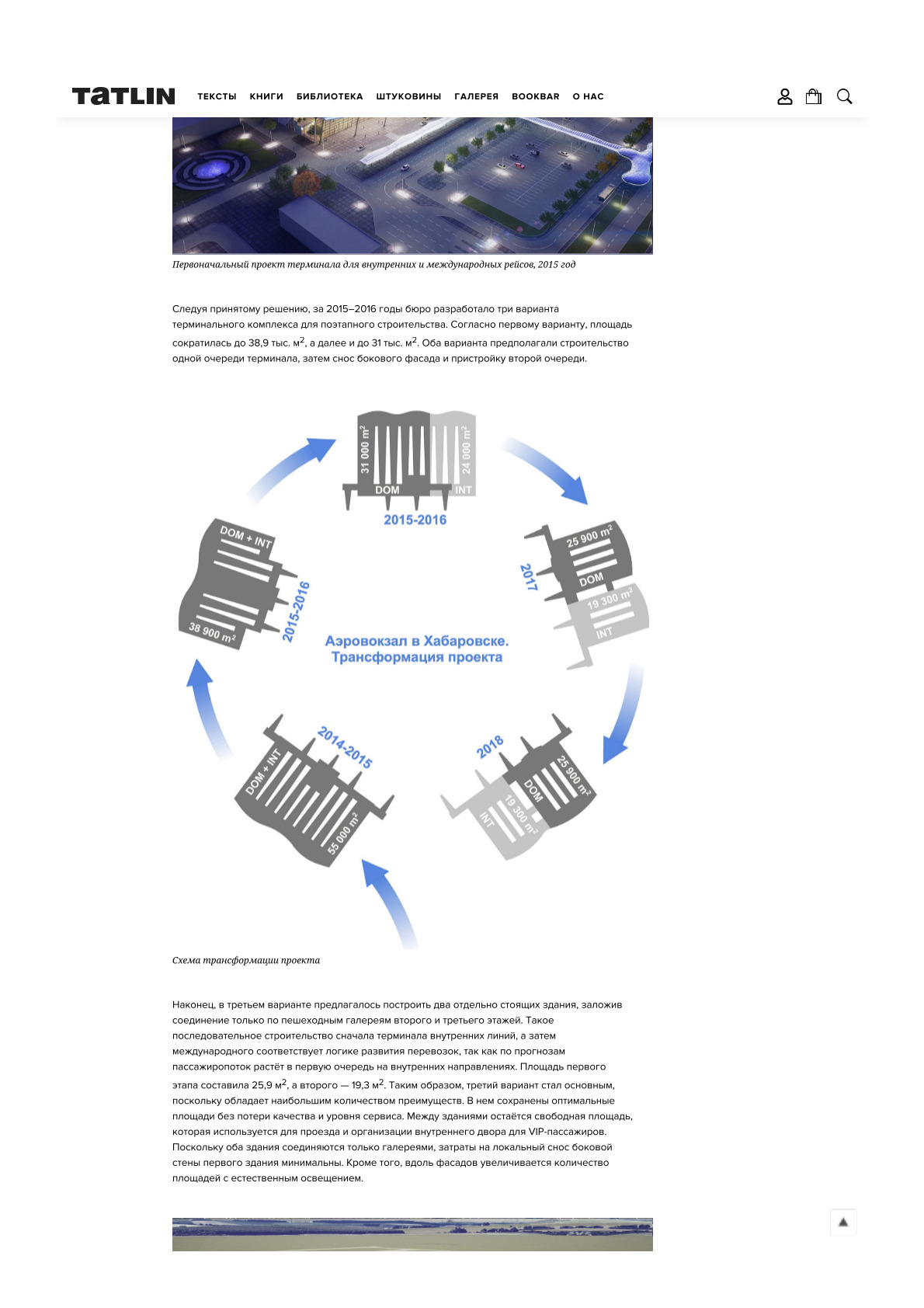
Between 2014 and 2015, WP|ARC developed a single integrated terminal of 55,000 m², designed for both domestic and international traffic, with a total capacity of 1,900 passengers per hour. However, economic and organizational realities soon demanded a more flexible approach. To reduce upfront investment, the project was divided into two separate terminals — one for domestic, one for international flights.

Fig. 5. Initial design of the terminal for domestic and international flights, 2015.
In the third and final design version, the architects proposed constructing two separate buildings, linked only by pedestrian galleries on the second and third floors. This sequential construction — first the domestic terminal (DOM), followed later by the international one (INT) — reflected the logic of traffic growth, as forecasts showed passenger numbers would increase primarily on domestic routes.
The first phase covered an area of 25,900 m², and the second — 19,300 m². This third option was ultimately chosen because it offered the greatest number of advantages. It maintained optimal spatial efficiency without compromising quality or level of service. The space between the two buildings was kept open, used for vehicle access and to form an inner courtyard for VIP passengers. As the terminals are connected only by elevated galleries, the costs of partial demolition of the first building’s side wall were minimal. At the same time, the design increased the amount of naturally lit areas along the façades, enhancing comfort and atmosphere.
Construction and Collaboration
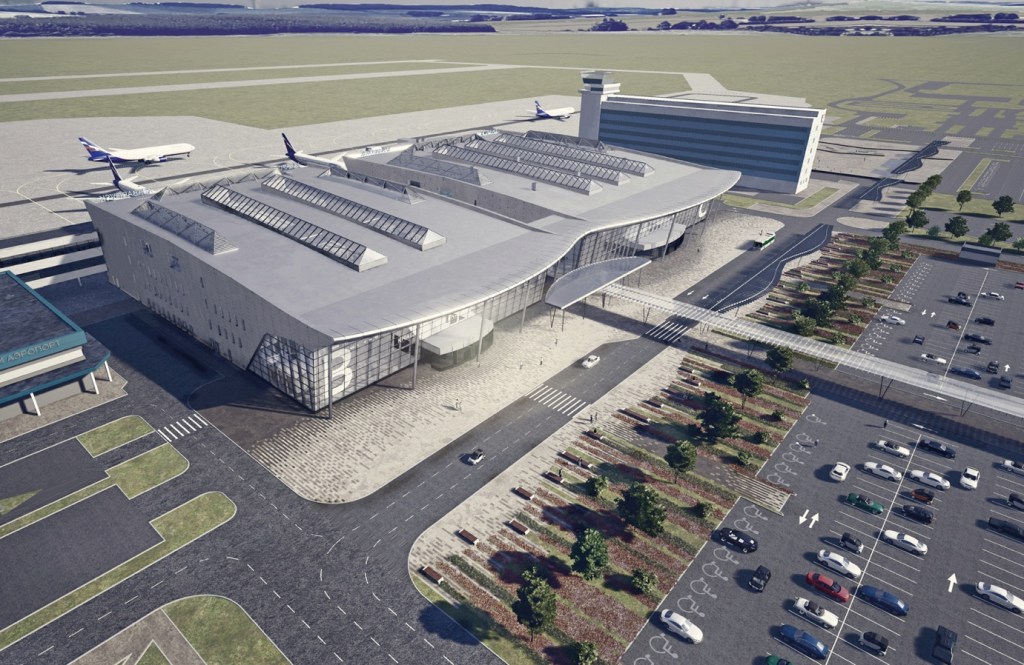
Fig. 6. Design for connecting the complex of two terminals, 2019.
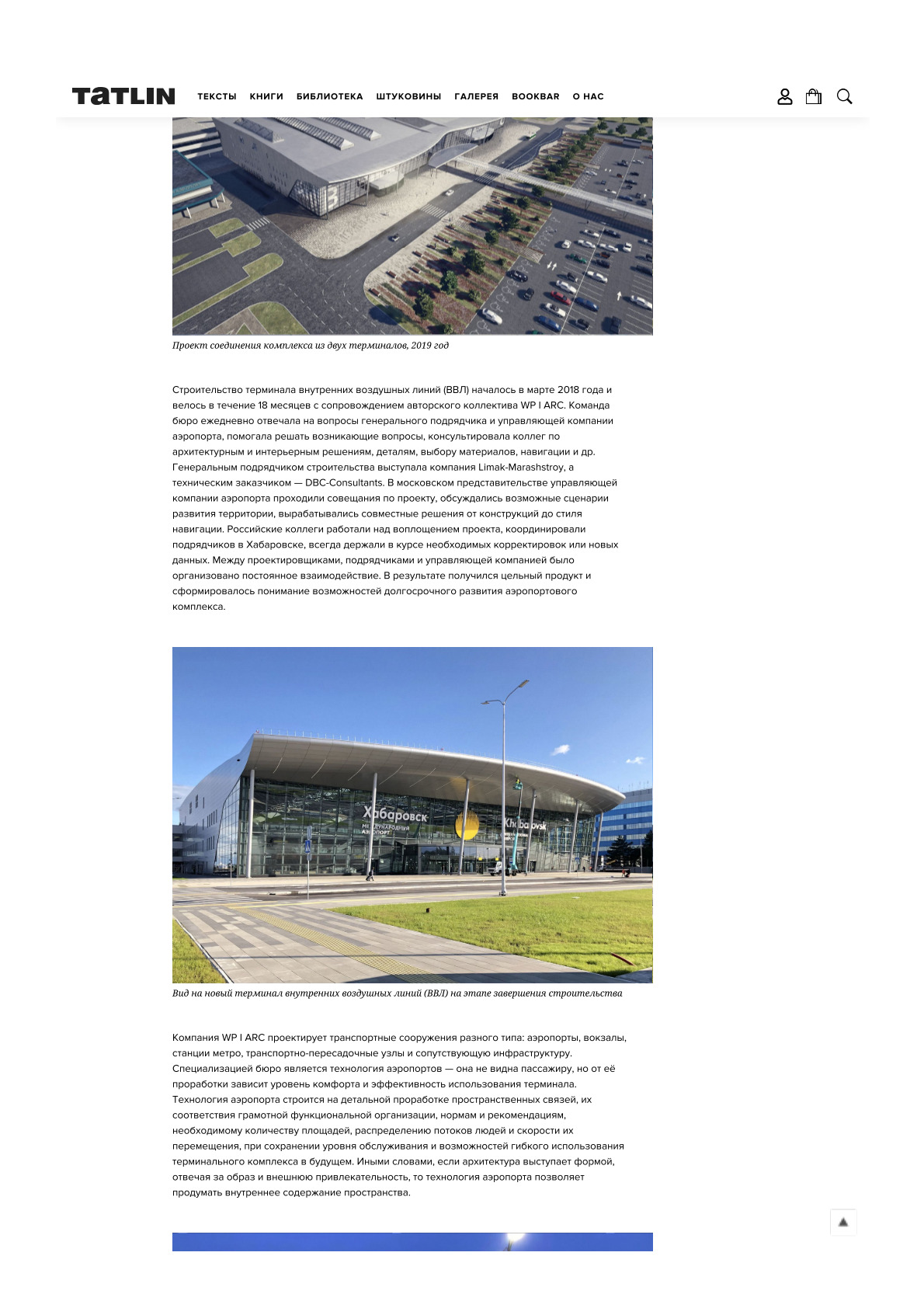
Construction of the domestic terminal began in March 2018 and lasted for 18 months, closely accompanied by WP|ARC’s author supervision team. The architects maintained daily coordination with the general contractor, Limak-Marashstroy, and the airport’s management company, providing on-site guidance, technical consultations, and advice on architectural and interior details, materials, and wayfinding design.
Project meetings were regularly held in the Moscow office of the airport’s management company, where alternative development scenarios were discussed and joint decisions made — from structural options to signage style. The Russian team managed local contractors in Khabarovsk, ensuring smooth communication and timely updates. This constant collaboration between designers, builders, and operators allowed the team to deliver a cohesive and functional product, while forming a shared understanding of the airport’s long-term potential as a complex urban hub.
Airport Architecture and Technology
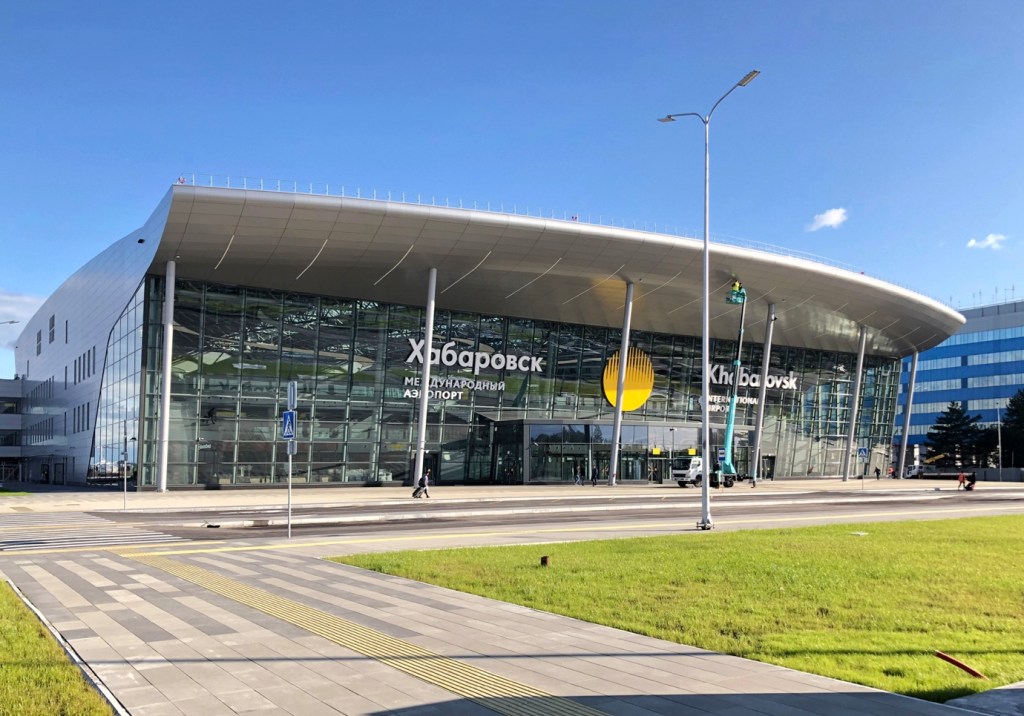
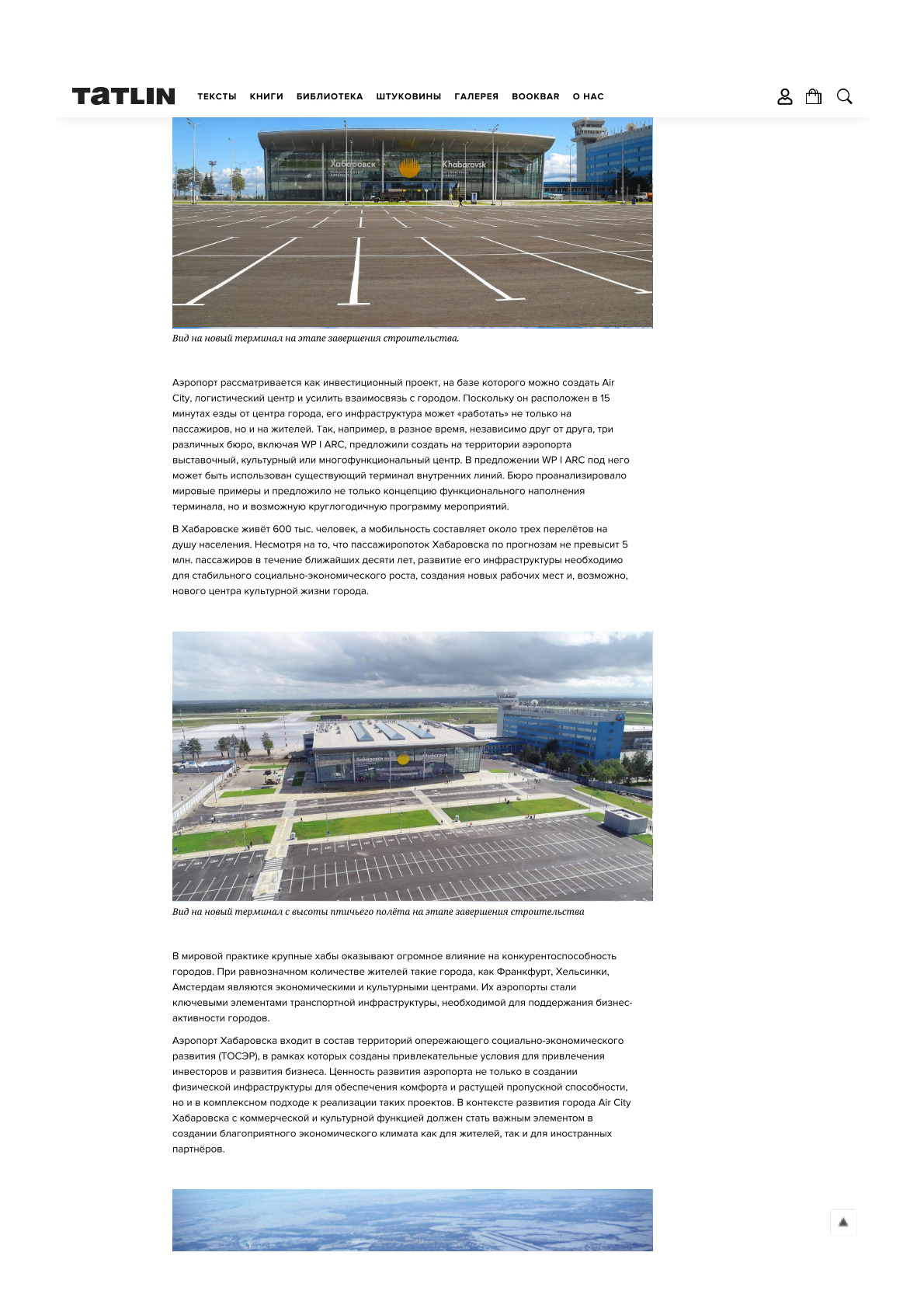
Fig. 7. View of the new domestic terminal (DOM) at the final stage of construction.
WP|ARC specializes in transport infrastructure — airports, railway stations, metro systems, and intermodal hubs. A particular focus of the practice lies in airport technology — the invisible framework that determines how efficiently and comfortably a terminal functions.
In WP|ARC’s philosophy, function defines form. The firm’s approach is based on a detailed analysis of spatial relationships, passenger flow logic, regulations, and operational flexibility. If architecture provides the image and character of the building, technology defines its inner life — how people move, wait, and experience space.
Design Philosophy and Spatial Qualities

Fig. 8. Night view of the new domestic terminal (DOM).
The new terminal fully complies with international design standards. It offers generous double-height halls, clear navigation, and an intuitive sequence of passenger procedures — from check-in to boarding. The design reflects WP|ARC’s signature attention to detail, visible in both functional solutions and architectural clarity.
The architectural language is restrained and precise — clean volumes, balanced proportions, and a calm, neutral color palette. Lighting, furniture, and finishes act as subtle focal points. The airport’s corporate identity uses five colors, from the warm “sunny yellow” of its logo to deep “Amur blue.” Public seating and tenant areas follow cooler northern shades of gray-blue, while ice-like pendant lights add liveliness to baggage halls and corridors. The wayfinding system was originally envisioned in sea-wave blue, but ultimately a classic yellow-and-black contrast was chosen for maximum clarity.
Inspired by the Amur and the Sun
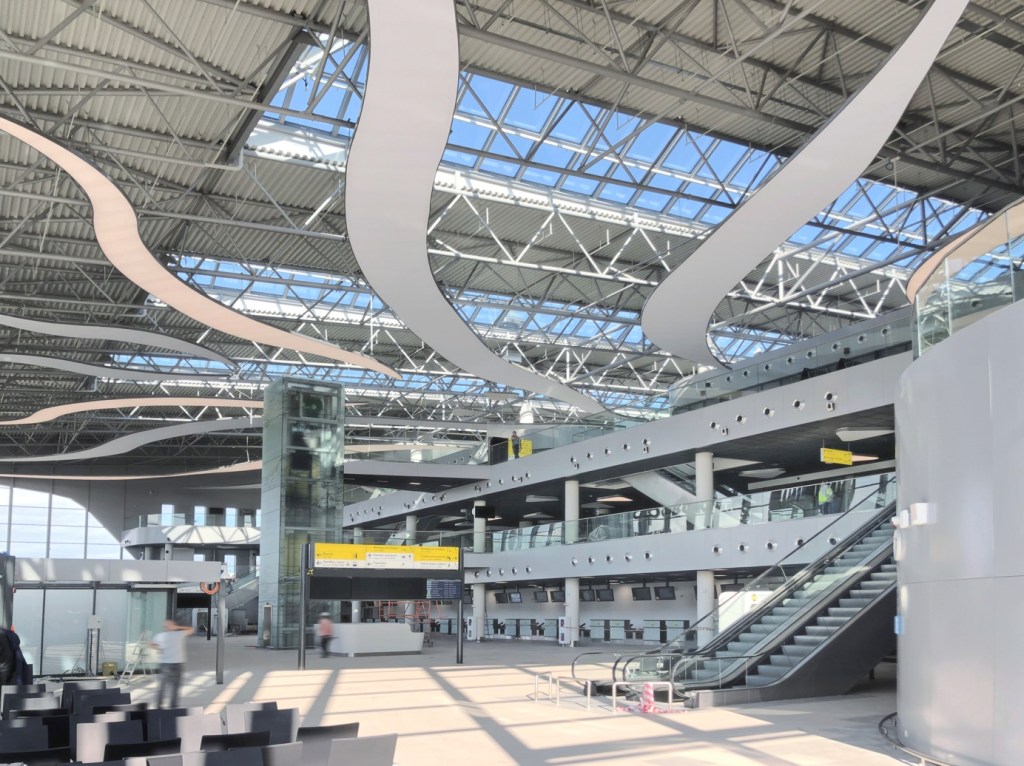
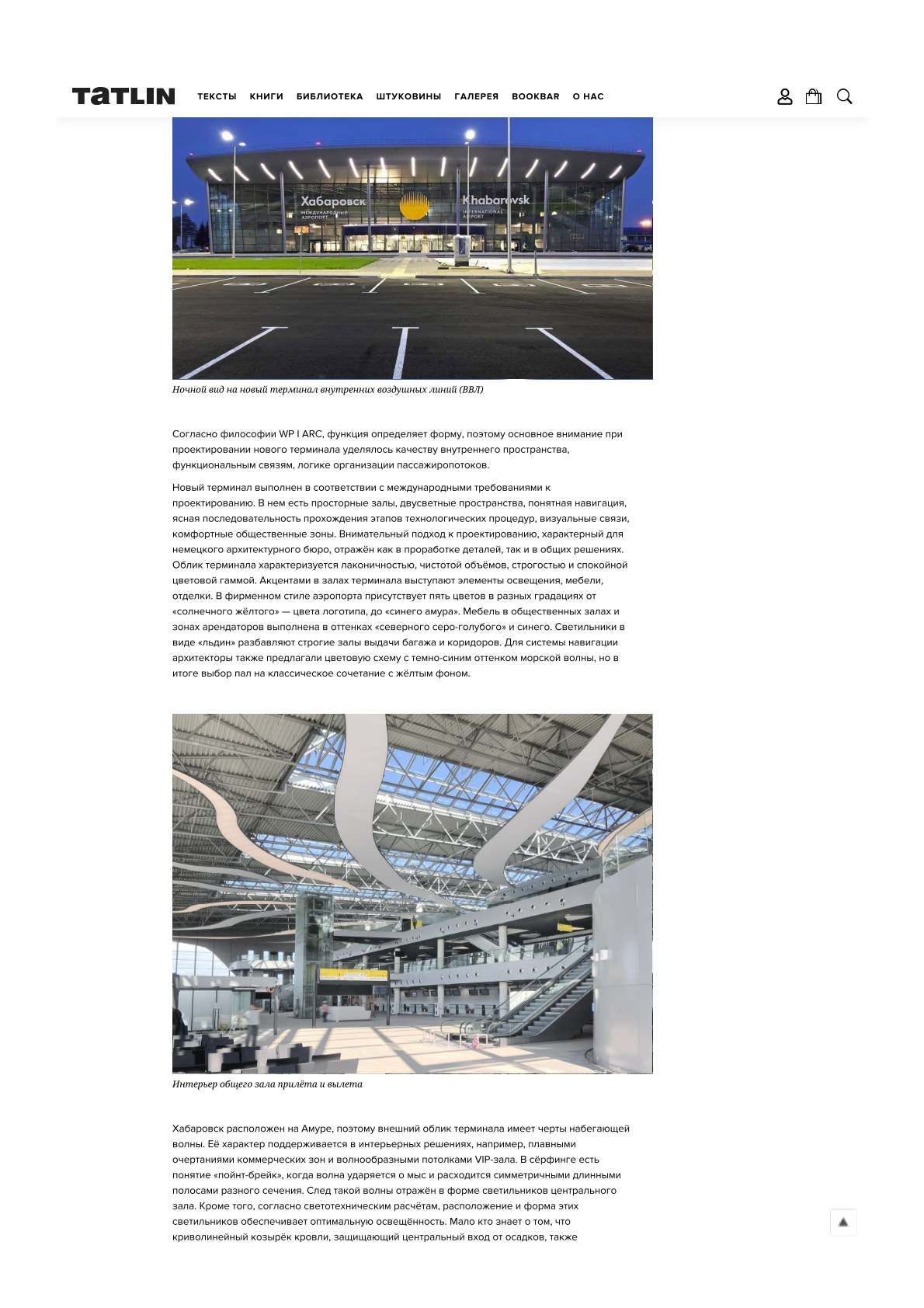
Fig. 9. Interior of the main arrivals and departures hall.
Khabarovsk lies on the Amur River, and the terminal’s exterior captures the image of a breaking wave.
This motif continues inside — in the flowing outlines of retail zones and the wave-shaped ceiling of the VIP lounge.
In surfing, a point break occurs when a wave hits a cape and unfolds into long, symmetrical lines. That image is reflected in the lighting fixtures of the main hall — their elongated forms echoing the rhythm of water. Their placement was carefully calculated for optimal illumination, ensuring both comfort and efficiency.
Even the terminal’s curved roof canopy, which shelters the main entrance from rain and snow, has an engineering logic: its aerodynamic form balances wind and snow loads. The upward pressure of the wind roughly equals the downward snow load, achieving a natural structural equilibrium — a perfect example of how form and function interact throughout the design.

Fig. 10. View of the terminal from the entrance side during construction, January / September 2019.
The Light of Khabarovsk
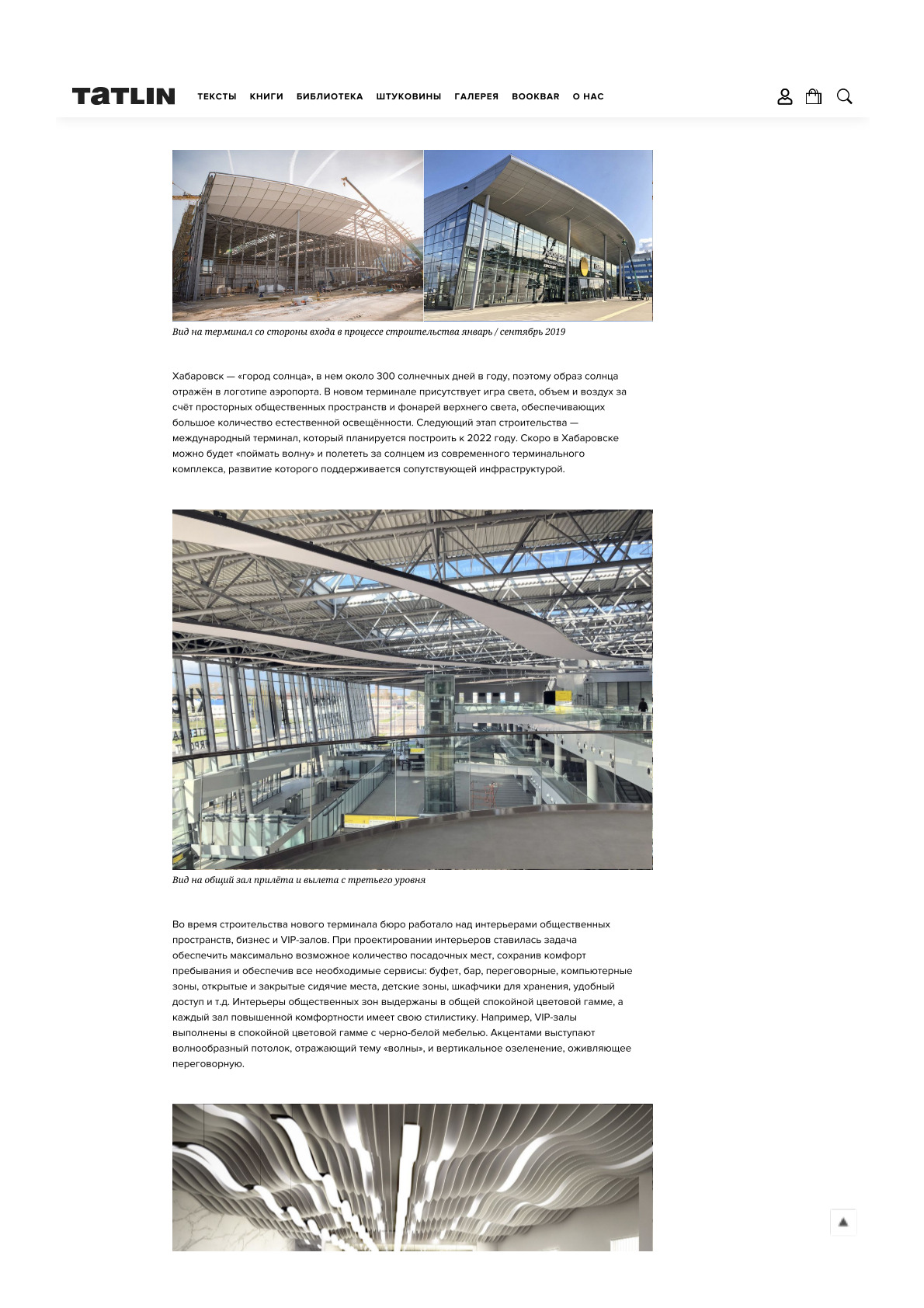
Known as the “City of the Sun,” Khabarovsk enjoys about 300 sunny days per year, and this is reflected in the airport’s logo and the interior atmosphere of the terminal. Large skylights and open public spaces create an impression of air and light, connecting travelers with the region’s bright, continental climate.

Fig. 11. View of the main arrivals and departures hall from the third level.
The next construction phase — the international terminal — is planned to follow the same logic and architectural rhythm, continuing the idea of a modern, light-filled complex.
Soon, passengers in Khabarovsk will quite literally be able to “catch the wave” and fly toward the sun — departing from a terminal that reflects both the city’s landscape and its aspirations.
Interior Design and Passenger Experience
During the construction of the new domestic terminal, WP|ARC simultaneously worked on the interior design for public areas, business lounges, and VIP zones. The task was to ensure the maximum number of comfortable seating spaces while maintaining an open, relaxed atmosphere and providing all essential amenities — a buffet, bar, meeting rooms, computer zones, children’s play areas, lockers, and both open and private seating areas.
The interiors of the public spaces maintain the overall calm and balanced color scheme of the building, while each premium lounge has its own character. For example, the VIP lounge is designed in elegant monochrome — black and white furniture, accented by a wave-shaped ceiling that continues the theme of motion and the Amur River. Vertical greenery adds warmth and freshness, turning the space into a quiet, welcoming environment for travelers and business meetings alike.

Fig. 12. Design of the VIP lounge interiors.
Planning the Second Stage
Between 2018 and 2019, while the first terminal was under construction, the architects developed options for the second phase — the international terminal. One of the first proposals considered reconstructing the 1993 domestic terminal to serve international flights.

Fig. 13. Concept for the reconstruction of the domestic terminal (DT): existing condition (left), proposed design (right).
However, this approach soon revealed significant limitations:
- The existing building had only two levels, whereas modern terminal standards require three to properly separate arrivals, departures, and technical areas.
- The depth of the structure was insufficient to house all necessary facilities for international operations, which typically require larger control zones and passenger handling spaces.
- Finally, the connection between the two terminals would have forced passengers to walk outside, contradicting the design intent of a seamless, weather-protected journey.
After reviewing all possible options, WP|ARC recommended building a new terminal adjacent to the domestic one instead. This proposal was accepted and became the foundation of the second development stage. Once all flights are transferred to the new buildings, the old terminal can be repurposed as a multifunctional or cultural center, ensuring continuity of use and preserving part of the site’s history.
Architectural Cohesion

Fig. 14. Proposal for connecting the two new terminals — domestic (DT) and international (IT) — via the roof structure.
The final design concept proposed a visual link between the two new terminals through their rooflines, creating a unified architectural silhouette when viewed from the airfield and the city approach. This solution gives the complex a coherent identity, emphasizing Khabarovsk’s ambition to become a recognizable gateway to the Russian Far East.
Honoring Admiral Nevelskoy
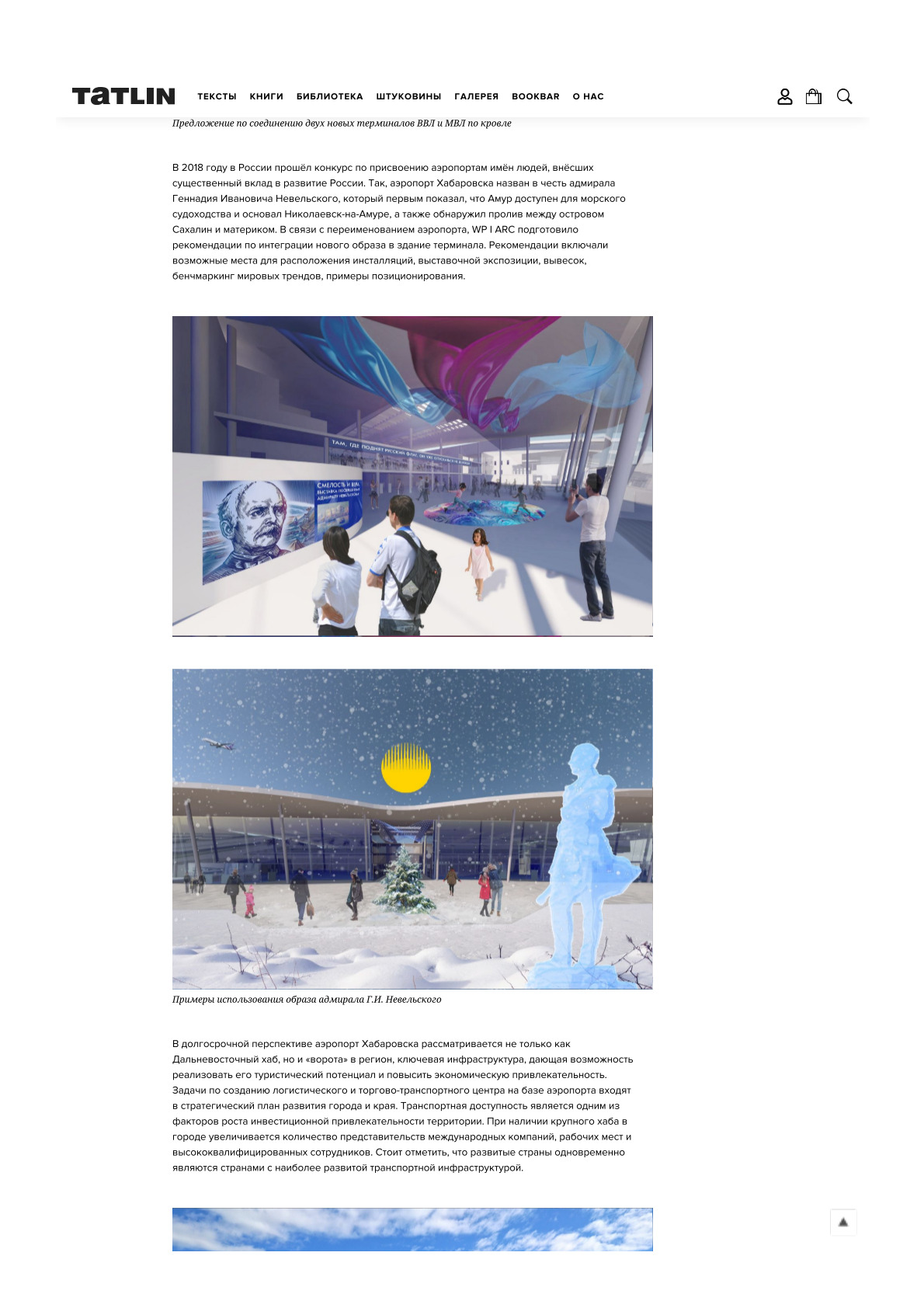
In 2018, a nationwide competition was held in Russia to assign airports the names of people who made significant contributions to the country’s development. Khabarovsk Airport was named after Admiral Gennady Ivanovich Nevelskoy, the explorer who proved that the Amur River is navigable, founded Nikolaevsk-on-Amur city, and discovered the strait separating Sakhalin Island from the mainland.
In response to the renaming, WP|ARC prepared recommendations for integrating the new identity into the terminal’s architectural and interior environment. These included proposals for installations, exhibition areas, signage, and visual storytelling, as well as benchmark examples of how other international airports incorporate cultural or historical figures into their design narratives.
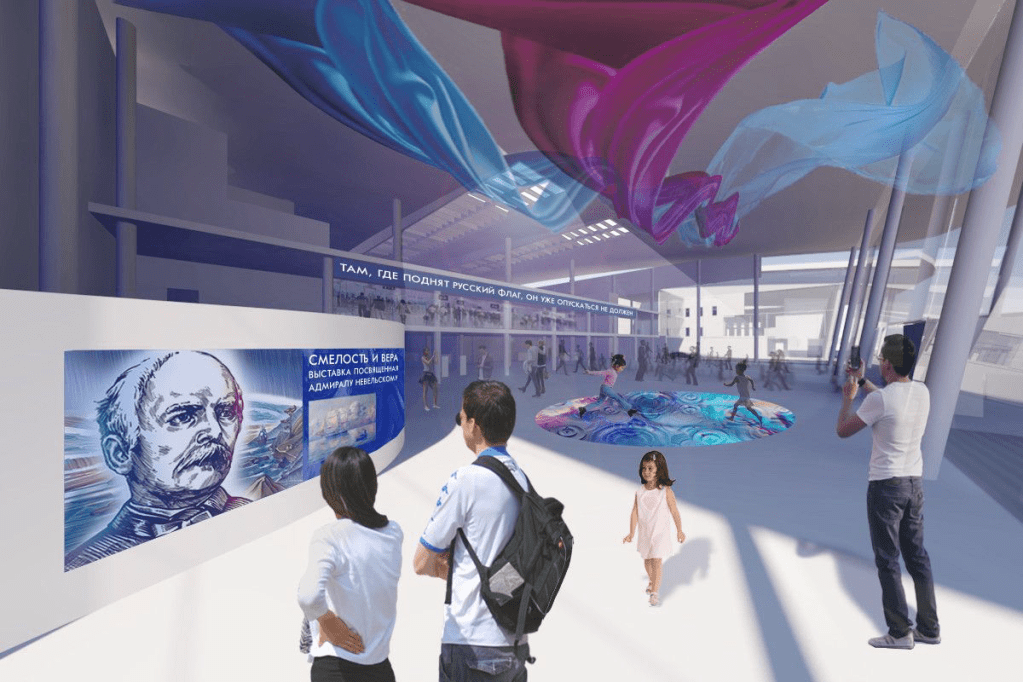
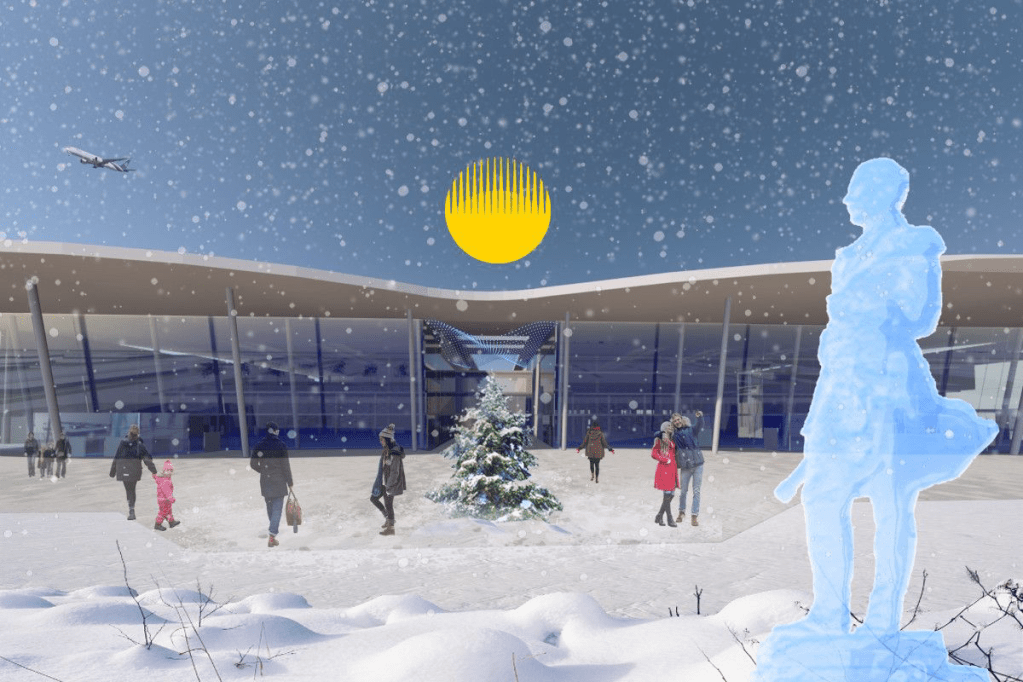
Fig. 15. Examples of the use of Admiral G. I. Nevelskoy’s image
A Gateway to the Far East
In the long term, Khabarovsk Airport is envisioned not only as a Far Eastern aviation hub, but also as a gateway to the region — a piece of infrastructure that can unlock its tourism and economic potential.
Developing a logistics and trade-transport center around the airport is part of both the city and regional strategic plans. Transport accessibility directly enhances the investment appeal of the territory: a strong hub attracts international company branches, qualified professionals, and new jobs. Indeed, the world’s most developed economies are those with the most advanced transport infrastructures.
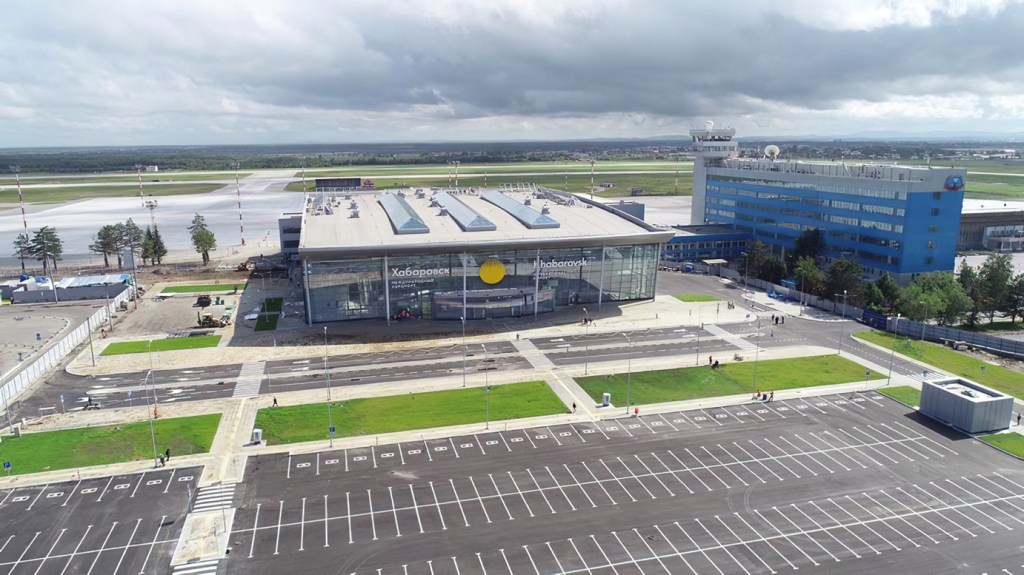
Fig. 16. Aerial view of the new terminal at the final stage of construction.
Air City and Urban Integration
Khabarovsk Airport is now seen not just as a transport facility, but as a major investment project — the foundation for a future Air City, logistics hub, and urban connector. Because the airport lies only 15 minutes from the city center, its infrastructure has the potential to serve not only travelers but also local residents.
Over the years, several design teams — including WP|ARC — have independently proposed ideas to transform parts of the airport area into a cultural, exhibition, or multifunctional center. WP|ARC suggested that the existing domestic terminal could be adapted for this purpose, supported by a year-round events program. The concept was based on international precedents, showing how airport-adjacent districts can host cultural and commercial functions that strengthen the relationship between the airport and the city.
Khabarovsk, with a population of about 600,000 people, already shows a relatively high mobility index — roughly three flights per person per year. Even though passenger traffic is not expected to exceed five million in the next decade, expanding the airport’s infrastructure is crucial for sustainable socio-economic growth, job creation, and perhaps even for forming a new cultural center of the city.
Global Context and Economic Potential
In global practice, large airport hubs play a decisive role in shaping cities’ competitiveness. Cities such as Frankfurt, Helsinki, and Amsterdam, comparable in size to Khabarovsk, have become economic and cultural centers precisely because their airports evolved into powerful international gateways and business ecosystems.
An airport strengthens urban development by ensuring mobility, connectivity, and visibility — three essential factors for attracting business activity and investment. Khabarovsk Airport is included in the Russian program of Territories of Advanced Social and Economic Development, which provides favorable conditions for investors and new enterprises.
The true value of developing such an airport lies not only in its physical infrastructure — terminals, runways, and logistics — but also in its integrated approach: combining commercial, cultural, and urban functions into one system. As part of the city’s Air City concept, Khabarovsk’s airport is expected to become a catalyst for regional growth, a new gateway to the Russian Far East, and a symbol of connection between East and West.
Meeting point Khabarovsk
The story of Khabarovsk Airport is more than a tale of infrastructure — it’s a case study in how architecture, technology, and planning can align to express the identity of a place. Through careful design and collaboration, WP|ARC and their partners created not only a functional terminal but also a landmark of transformation — one that connects the history of the Amur River city with its global future.
Khabarovsk’s “Attraction Point” stands as both a physical gateway and a metaphor — for openness, progress, and the enduring power of thoughtful design to shape how people experience movement, light, and belonging.
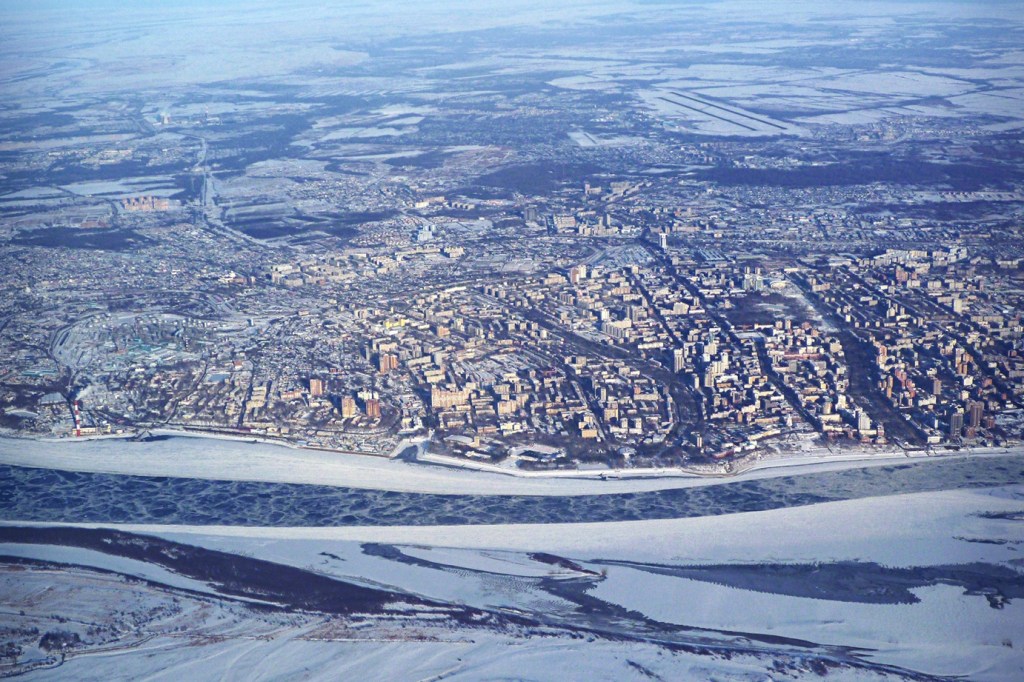
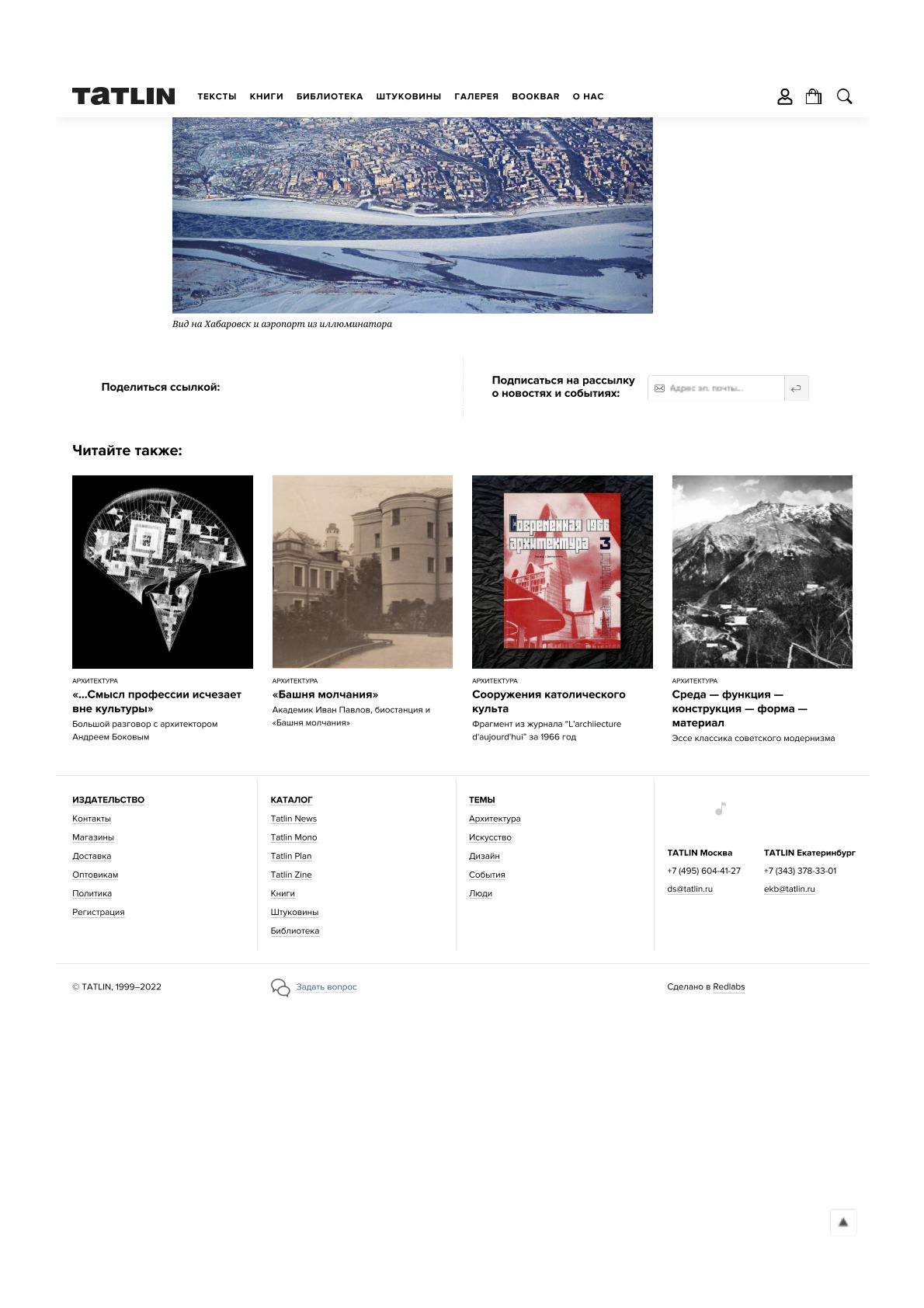
Fig. 17. View of Khabarovsk and the airport from the aircraft.
The original text is published in TATLIN journal (in RUS).



 Personal website